

Equine welfare is a strategic line of work for CENRE and an essential element in moving towards more technical, responsible and sustainable horse management.
Animal welfare is understood not merely as the absence of disease, pain, fear or stress, but as a comprehensive state in which the animal can live with good physical conditions, opportunities for natural behaviour and positive experiences.
From this perspective, CENRE works to bring the sector scientific knowledge, technical criteria, European references and practical tools that help improve the assessment and application of welfare in breeding, handling, reproduction, training, housing, transport and the day-to-day relationship with the horse.
What is CENARBA →
CENARBA is the National Reference Centre for Animal Welfare. Its purpose is to strengthen scientific and technical support on animal welfare, fostering coordination, knowledge transfer and the harmonisation of criteria in this field.
EXPASA is part of the CENARBA consortium together with the Institute of Agrifood Research and Technology (IRTA) and the Autonomous University of Barcelona (UAB). EXPASA contributes CENRE's applied experience in the equine field, bringing a practical perspective on the handling, breeding, reproduction, conservation, training and day-to-day management of equids, with the scientific support of the University of Córdoba (UCO).
Designation by Royal Decree 69/2026 →
Royal Decree 69/2026 of 4 February designates, in Article 7, the IRTA–UAB–EXPASA Consortium as the National Reference Centre for Animal Welfare for a period of four years. With this designation, EXPASA Yeguada Cartuja becomes part of a strategic national body aimed at strengthening the uniform, coordinated and science-based application of European and national animal welfare and protection legislation.
Main functions →
BOERoyal Decree 69/2026 of 4 February designating the National Reference Centre for Animal Welfare↗
EFSA's work →
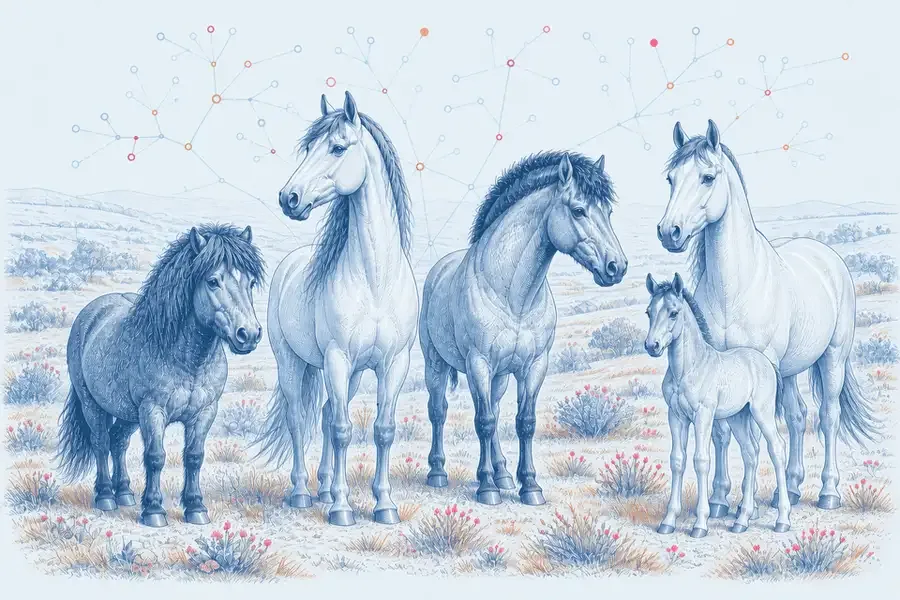
The European Food Safety Authority (EFSA) carries out scientific work that supports the competent authorities and the sectors involved in animal health and welfare.
In the equine field, EFSA's work is especially relevant for identifying risks, gathering technical information and guiding future recommendations or regulatory developments. Its recent lines of work include equine reproduction practices, welfare at slaughter, end of life and the identification of factors that can compromise horse welfare.
CENRE incorporates these references as part of its knowledge transfer work, bringing the sector scientific and technical information that can be turned into training, outreach materials, conference days, handling criteria and practical improvement tools.