
Pharmacokinetics of intravenous paracetamol in horses
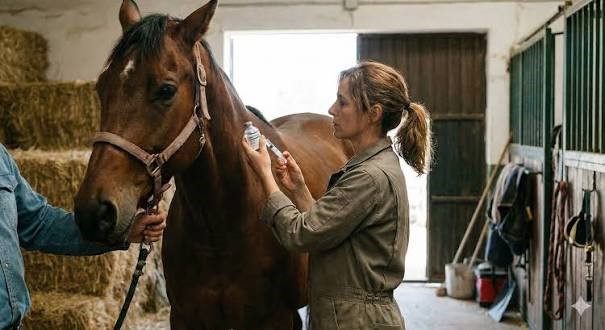
Description →
In 2022, CENRE signed a specific collaboration agreement with the University of Córdoba for the development of the research project “Determination of the pharmacokinetics of intravenous paracetamol in horses”, with the Department of Animal Medicine and Surgery and the Department of Nursing, Pharmacology and Physiotherapy — Pharmacology Area — acting as the main research units. The project is led on behalf of the University of Córdoba by Professor María del Mar Granados Machuca, Senior Lecturer at the University of Córdoba, with further research staff from those departments also taking part.
Project objective
The main objective of the project is to determine the pharmacokinetics of intravenous paracetamol in healthy horses following administration of two different doses, 10 and 20 mg/kg, also analysing the influence of fasting and sex on the pharmacokinetic parameters.
The study seeks to generate a solid scientific basis for a better understanding of how paracetamol behaves when administered intravenously in horses, and to assess its possible clinical application in this species.
State of the science
Paracetamol is an analgesic widely used in human medicine and in other species. However, in horses there is still little published information on its use, particularly by the intravenous route.
In equine medicine, the use of opioid analgesics has significant limitations, including their effect on intestinal motility and restrictions on their prescription. Perioperative analgesia therefore relies mainly on non-steroidal anti-inflammatory drugs, whose effect may prove insufficient in some procedures.
In this context, the project aims to advance knowledge of paracetamol as a possible tool within multimodal analgesia protocols, helping to expand the options available for pain management in horses.
Purpose
The ultimate purpose of the project is to establish the pharmacological basis needed to assess the possible clinical use of intravenous paracetamol in horses, with an appropriate and safe dosage regimen.
The agreement notes that previous studies have been limited and that dosing not previously based on pharmacokinetic data may mask the drug's potential analgesic effect. This work therefore aims to provide scientific evidence useful for equine veterinary practice and could pave the way for future regulatory developments at European level.